
From Field School to Market Chain:
How WDF is Transforming Smallholder Farming in Busoga & Rwenzori
Across the rain-washed slopes of Rwenzori and the fertile lowlands of Busoga, something quiet but transformative is underway. Smallholder farmers many of them women and youth are no longer waiting for the rains to decide their fate. Through Wilmat Development Foundation’s integrated Farmer Field Schools and VSLA programming, communities are building resilience from the ground up.
Uganda’s smallholder farmers contribute over 75% of the country’s agricultural output, yet remain among the most vulnerable to climate shocks. Erratic rainfall, prolonged dry spells and soil degradation have eroded yields and livelihoods across both the Busoga sub-region in the east and the Rwenzori sub-region in the west two areas where WDF has been embedded since 2017.
What is the Farmer Field School Approach?
The Farmer Field School (FFS) model is not a classroom. It is a living, breathing learning space set right in the community’s own fields. Rooted in participatory adult learning, the FFS brings farmers together over a full growing season meeting weekly to observe, experiment, and draw conclusions from what they see in their own plots.
WDF’s adaptation of this globally proven model is deeply contextualised for Busoga and Rwenzori. Rather than importing generic agronomy, our field facilitators work alongside local agricultural extension workers and community resource persons (CRPs) to ensure the learning reflects what the land, the climate, and the people actually need.
We used to plant the way our grandparents planted. Now we understand our soil, we test, we compare. My maize yield this season was almost double.
— Namukasa Rose, FFS Member, Mayuge District, BusogaClimate Smart Agriculture: Not a Buzzword, but a Practice
WDF’s 2020 baseline study Assessing Community Response to Climate Smart Agriculture documented a critical finding: communities in both sub-regions were acutely aware of climate change impacts but lacked the structured knowledge, inputs and institutional backing to respond systematically. Five years on, that gap is narrowing.
Our FFS curricula embed three pillars of Climate Smart Agriculture (CSA): sustainably increasing agricultural productivity; building adaptive capacity to climate shocks; and where possible, reducing greenhouse gas emissions from farming systems.
🌦 Busoga Sub-Region
Focus on drought-tolerant crop varieties (Vegetables, sorghum, cassava, groundnuts), water harvesting and intercropping systems for soil moisture retention. Farmers also practice agro-forestry to restore degraded lands along River Mpologoma watersheds.
🏔 Rwenzori Sub-Region
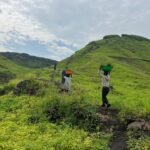
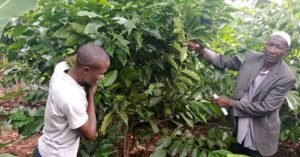
Emphasis on terracing and soil conservation on mountain slopes, diversified coffee, banana systems, vegetables and integrated pest management (IPM) amid altered rainfall patterns. WDF-linked farmers in Kasese and Bunyangabu are piloting solar-powered micro-irrigation.
VSLA: Turning Savings into Productive Capital
The climate-smart farming journey does not end at the field boundary. Without access to finance, even the best agronomic knowledge cannot be converted into improved inputs, equipment or market positioning. This is precisely why WDF’s Bikasave VSLA (Village Savings and Loans Association) model sits at the heart of our livelihoods strategy.
VSLAs are community-owned, member-run financial platforms. Each group of 15–25 members meets regularly to pool savings, issue small loans, and share out accumulated capital on a defined cycle. Unlike microfinance institutions with their high interest requirements and collateral demands, VSLAs are self-governing and low-barrier perfectly suited to remote and semi-urban farming communities where formal banking is either inaccessible or intimidating.
Average share-out per member cycle: UGX 380,000 – 620,000 (~$100–$165)
Loan repayment rates: Consistently above 92% across active groups
Proportion reinvested in agriculture: 67% of loans (2023–2024 cohort data)
Active VSLA groups linked to FFS: 38 groups across Busoga and Rwenzori
Eyeing Value Addition and Market Expansion
The next frontier for WDF’s integrated programming is moving farmers beyond subsistence and into market participation and specifically, into the value addition chain. Producing raw maize, cassava or groundnuts for sale at farm gate prices captures only a fraction of the product’s potential value. Processing, packaging, branding and direct-to-market access change that equation entirely.
WDF is now supporting selected VSLA groups those that have completed at least two savings cycles and demonstrated stable group governance to collectively invest their share-out capital into small-scale value addition enterprises. These include:
- 1Cassava Flour Milling (Busoga) Groups in Iganga and Kaliro districts are pooling resources to access communal milling equipment, enabling them to sell processed high-quality cassava flour to urban markets and school feeding programmes rather than raw tubers at farm gate.
- 2Groundnut Oil Pressing (Rwenzori) VSLA groups in Kasese are investing in cold-press groundnut oil production. Branded packaging and linkages to regional supermarkets and hotels are being piloted through WDF’s market systems facilitation support.
- 3Solar-Dried Produce (Both Sub-Regions)Post-harvest losses are a major income drain. WDF is introducing solar drying technology for chilli, tomatoes and mushrooms extending shelf life and opening access to both regional and export-oriented buyers.
- 4Collective Bulking for Market NegotiationBy aggregating produce across FFS-linked groups, farmers can negotiate better prices and meet minimum order quantities demanded by institutional buyers including local hospitals, schools and the Uganda Revenue Authority’s canteen procurement program.
- 5Digital Market LinkagesIn partnership with selected agri-tech platforms, WDF is piloting a mobile-based market information system enabling farmers to track commodity prices across districts before committing to a sale, reducing exploitation by middlemen.
When we first started the VSLA, we were saving for school fees. Now we’re running a business together. We have a drying rack, we have a market in Kasese town — we’re businesswomen.
— Kyakimwa Annet, Bikasave Group Leader, Kasese District, RwenzoriThe Integration That Makes It Work
What sets WDF’s approach apart is not the individual components; FFS, CSA, and VSLA are each well-established models but the deliberate integration between them. The field school builds knowledge and confidence. The VSLA builds capital and solidarity. The market systems facilitation converts both into sustainable livelihoods.
This integrated model also ensures that women and youth historically excluded from both formal financial services and agricultural extension are centred, not added as afterthoughts. In WDF’s FFS groups, women hold at least 60% of leadership roles. In Bikasave VSLA groups, the majority of chairpersons and treasurers are women.
The road ahead is not without challenges. Climate change is accelerating, input costs continue to rise, and many farmers remain one bad season away from food insecurity. But the foundations are being laid in field schools, savings meetings, and shared drying racks for a more resilient and prosperous smallholder sector in Uganda’s Busoga and Rwenzori sub-regions.