Farming with Nature,
Not Against It
In Uganda’s Rwenzori sub-region, flash floods, landslides and human-wildlife conflict are not occasional disruptions, they are a constant reality. We are currently equipping smallholder farming families with organic practices that rebuild soils, protect crops and restore livelihoods.
Triple ShocksFlash floods, landslides and crop-raiding wildlife erode food security year after year in Rwenzori.
Organic SolutionsRaised beds, composting and agroforestry offer low-cost, climate-resilient options for steep fragile terrain.
Community-Led At WDF, we support farming families to grow in harmony with their environment while improving nutrition and income.
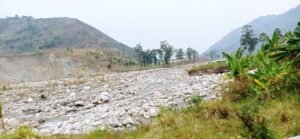
Living on the Edge: The Rwenzori Reality
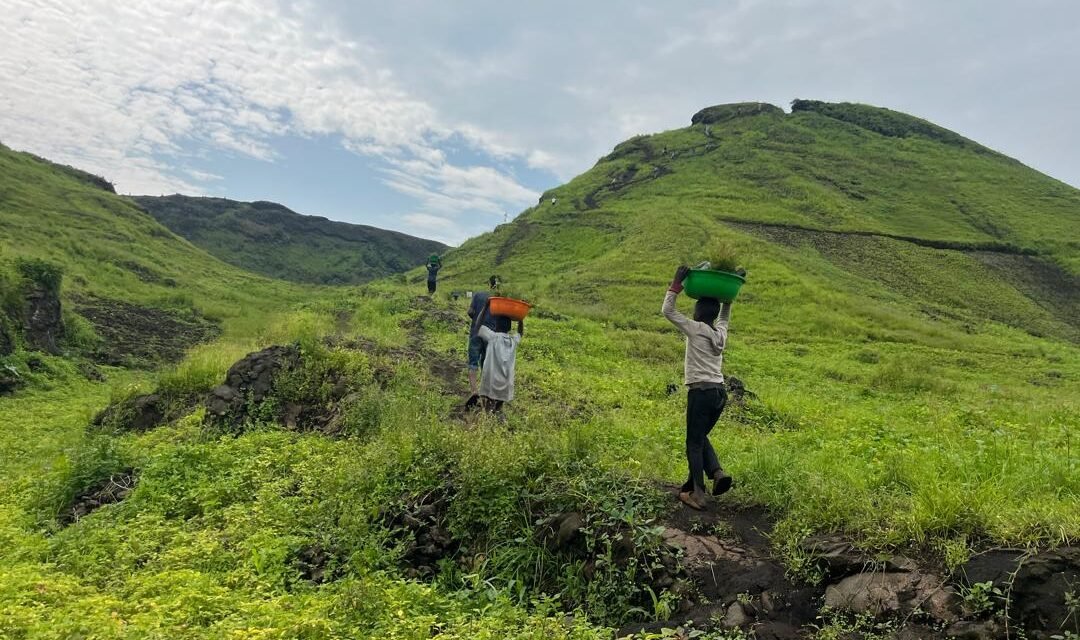
The Rwenzori Mountains are among Uganda’s most breathtaking landscapes in Uganda and among its most hazardous. Communities nestled along mountain slopes and river valleys face a recurring cycle of devastation. Heavy seasonal rains trigger flash floods that wash away crops overnight. Steep hillside soils, stripped bare by deforestation and ploughing, give way to landslides that bury fields and destroy homesteads.
As forests shrink, elephants, baboons and other wildlife venture deeper into farmland, raiding the very crops that families depend on to survive. For smallholder farmers, the majority of them women these overlapping shocks mean that a single growing season can erase an entire year of effort.
“Soil fertility declines with each flood. Crop diversity narrows. Children go hungry. And with little income left to invest in their farms, the cycle deepens.”— WDF Uganda Field Assessment, Rwenzori Region
This is the context in which Wilmat Development Foundation (WDF) works. And it is exactly why we believe that organic farming is not simply an agricultural choice — it is a survival strategy.
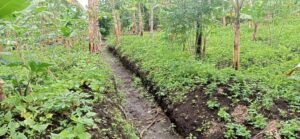
Building Resilience from the Ground Up
Conventional farming methods — particularly those relying on chemical fertilizers and deep tillage — increase the vulnerability of Rwenzori’s fragile hillside soils. They accelerate erosion, degrade soil structure and leave farmers dependent on costly inputs that evaporate with the next flood. Organic practices work differently: they work with the land, not against it.
Organic methods rebuild the soil’s ability to absorb and retain water — critical in a region where both floods and dry spells are intensifying. They reduce the need to clear new land, easing pressure on the forest buffer zones that protect farms from landslides and wildlife. And because organic inputs — compost, manure, plant matter — can be produced on the farm itself, they remain accessible even after a flood wipes out a family’s cash savings.
Organic Practices That Are Changing Lives in Rwenzori
Raised Beds & Contour Trenches
Raised beds elevate crops above floodwaters and improve drainage. Contour trenches slow runoff, trap sediment and channel excess water away from planted areas — dramatically reducing crop loss during heavy rains.
Composting & Organic Manure
Floods strip topsoil of nutrients. Compost made from kitchen waste, crop residues and animal manure rebuilds this fertility naturally and cheaply as compost-fed soils resist erosion better than chemically treated ones.
Agroforestry: Trees as Allies
Tree roots bind hillside soils, reducing landslide risk. Species like Calliandra and Grevillea fix nitrogen into the soil while providing fuelwood, fodder and fruit — and deter wildlife from entering farm plots.
Crop Diversification & Intercropping
A farm that grows only one crop is one flood away from total loss. Mixed planting systems ensure that when one crop fails, others survive — and nutritious food remains available year-round for the whole family.
Mulching for Moisture
Covering soil with dry grass, crop residues or banana leaves conserves moisture, suppresses weeds and gradually enriches the soil as organic matter decomposes. Simple and free as any farmer can adopt it immediately.
Natural Pest & Wildlife Deterrents
Chilli and garlic sprays deter insects and small mammals. Dense hedgerows of Mexican marigold or thorny species discourage elephants. Bee-keeping improves pollination, deters some wildlife and produces honey to sell.
“After the floods took our maize two seasons in a row, I thought there was no solution. Then we learned about contour trenches and raising our beds. Last season, my neighbors lost everything again. My garden survived.”
— A farmer from Kasese District, Rwenzori Region“The elephants used to come every week. Since we planted the marigold hedgerow and started keeping bees, the raids have become rare. And the bees are giving us honey to sell.”
— A smallholder farmer, Bundibugyo District“I now space my crops better, apply compost, and use trenches to hold water in my garden. These practices have boosted my yields and kept my family fed through the dry months too.”
— A mother of five, trained by WDF Uganda’s Community Resilience Farmers programmeCommunity-Led, Locally Rooted
No two farming communities in Rwenzori face the same combination of risks. A village on a high mountain slope grapples with different erosion patterns and wildlife pressures than one on a valley floor prone to river flooding. WDF’s approach begins by listening — understanding each community’s specific needs, existing knowledge and cultural practices before introducing any new technique.
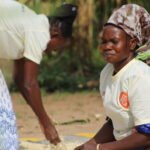
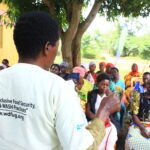
Our Community Resilience Farmers — local men and women trained as organic farming champions — serve as the backbone of this work. They conduct demonstrations in their own gardens, train neighbors in practical skills and provide ongoing peer support. Because the knowledge is held within the community rather than dependent on outside experts, it persists and spreads long after a project cycle ends.
We also works closely with local government agriculture departments, conservation organizations managing the Rwenzori Mountains National Park, Queen Elizabeth National Park and district disaster risk management committees ensuring that organic farming promotion is coordinated with broader land use planning and flood early warning systems.
A More Resilient Future for Rwenzori Families
The challenges facing Rwenzori’s farming communities are deep-rooted. Climate change is intensifying rainfall variability. Deforestation continues to increase landslide risk. Human-wildlife conflict remains unresolved across many communities. But the families we work with are not passive victims — they are skilled, determined farmers who, given the right knowledge and support, can transform their circumstances.
When a farmer rebuilds her soil with compost, she is not only feeding her family this season — she is making her land more resilient to the next flood, and the one after that. When a community plants agroforestry buffers, they reduce their own landslide risk. When a village adopts diverse cropping systems, they build a food safety net that no single weather event can entirely destroy.
This is the work of Wilmat Development Foundation. And it is work that your partnership makes possible.
Support Organic Resilience Farming in Rwenzori
Partner with Us today to help farming families across the Rwenzori region farm with nature — not against it.
Learn More & Partner With Us www.wdfug.org